Know what your painting
is worth, before you decide.
That canvas from the attic or from an estate — is it decorative, or a discovery? A signature does not tell the whole story, and the internet will readily lead you astray. Upload your photos and let specialist auction houses consider them, without obligation.
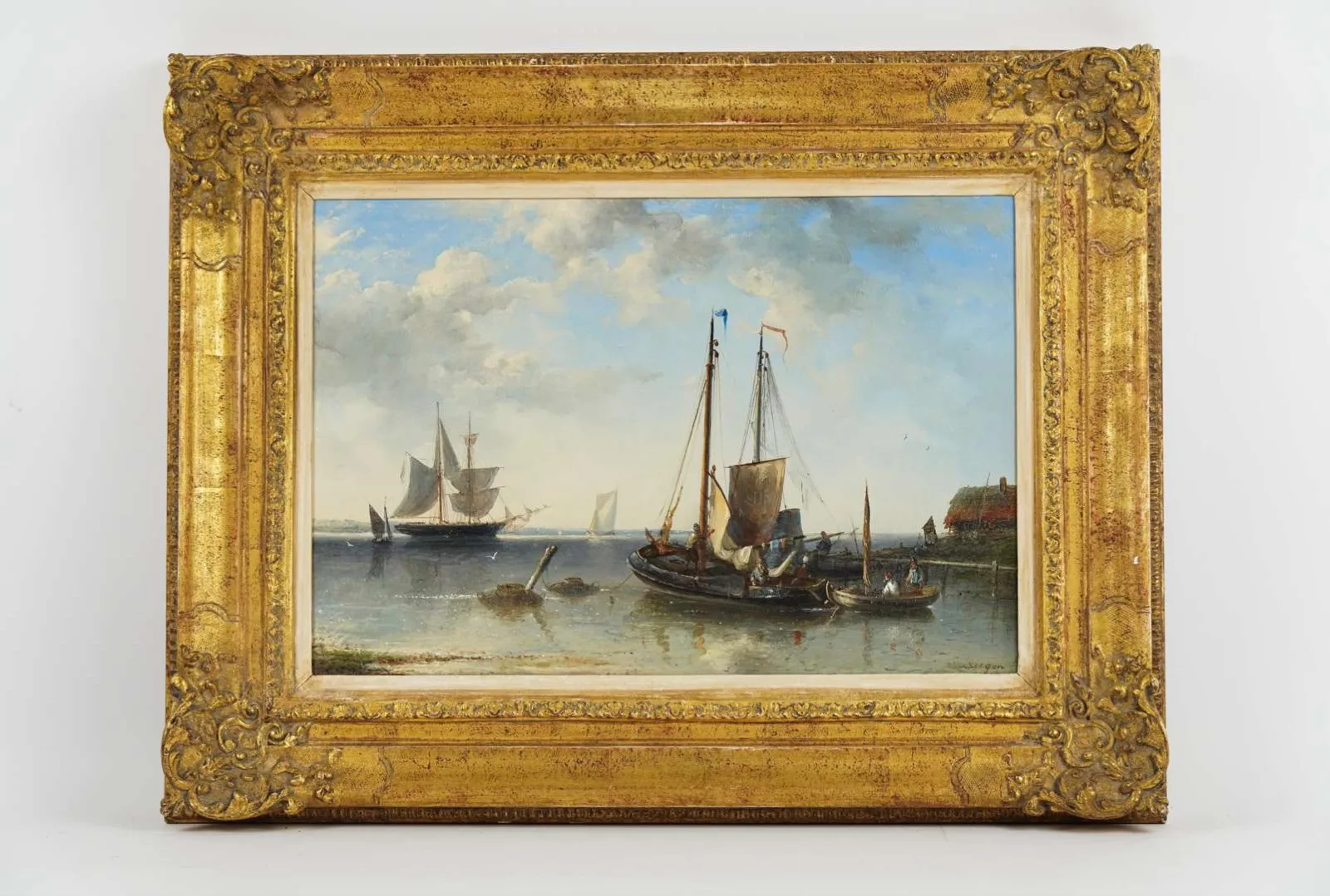
What does art fetch at auction?
By way of indication — what comparable work fetches at auction:
Price indications based on public auction results · not a valuation of your specific object
What determines the value of a painting?
Two canvases may resemble one another and yet differ in price by a factor of one hundred. These are the six things a specialist looks at first:
The artist and the attribution
By far the greatest factor. A single name makes the difference between decoration and a discovery — but 'signed' is not the same as 'genuine'. Specialists consider whether style, technique and period are consistent with the signature; a work 'attributed to' an artist fetches less than an undisputed work.
The signature — even if you cannot read it
An illegible scrawl is not a dead end. Monograms, studio stamps and even the manner of signing can often be traced. Photograph the signature separately (and the back of the canvas): that is precisely where the clues are to be found.
Period and movement
The Hague School, Romanticism, CoBrA, post-war abstraction: each movement has its own market and its own price level. Works that sit squarely within a sought-after movement consistently fetch more than comparable work outside it.
Technique and size
Oil on canvas is generally valued more highly than a watercolour or drawing by the same hand; a substantial salon piece differently from a small panel. There is no fixed rule — but technique and dimensions help to determine the auction and price range in which a work belongs.
Condition and restoration
Small tears, overpainting, yellowed varnish or a damaged frame depress the value — but by no means always as heavily as owners fear. Never have a work cleaned yourself before an assessment: well-intentioned cleaning does harm more often than good.
Provenance and history
Where does the work come from? A gallery receipt, an auction label on the reverse or a place in a family collection since the 1930s — provenance gives buyers confidence and can visibly raise the price achieved. Never throw documents or labels away.
From photo to opinion, in three steps
Take a photo
Upload one or more photos of your object. No knowledge, description or prior valuation is needed.
AI recognises and sorts
Our AI reads form, material and style, and places your object with the right specialists.
Specialists assess
Specialist auction houses give an opinion of value without obligation. The decision that follows is yours.
At no cost to you. Always without obligation.
It costs you nothing. You receive an opinion from a specialist auction house, without obligation, and you always decide for yourself what to do with it.
Frequently asked questions
The signature is illegible. Is there any point in submitting the work?
All the more so. Specialists recognise artists by style, technique and monogram — not only by a legible name. Photograph the signature and the back of the canvas separately as well; the best clues are often found there.
Is a photo enough to determine the value?
For an initial opinion of value, yes: good photos of the front, the signature and the back tell a specialist a great deal. Should your work prove promising, a closer assessment by the auction house follows as a matter of course.
What does it cost, and am I committed to anything?
Nothing, and no. The opinion of value costs you nothing and is without obligation. You decide whether, and where, you wish to sell at auction.
I have inherited a painting together with several other heirs. How should I approach this?
An independent opinion of value is then particularly helpful: it gives all the heirs the same starting point before any decision is made about dividing or selling. You can have the work assessed without obligation and without anything being fixed.
How do I know whether my painting is genuine?
Certainty about authenticity requires examination by a specialist — sometimes even technical analysis. The first selection, however, can be made quickly: on the basis of your photos, specialists can see whether a work merits serious consideration. That is precisely where you begin here, free of charge.
Discover what you hold in your hands
One photo is enough to begin. Without obligation, free of charge, and assessed by those who truly know the field.
Submit your object